SEA LIFE Kelly Tarlton’s Aquarium visitor guide
SEA LIFE Kelly Tarlton’s Aquarium is Auckland’s best-known aquarium, and it’s most famous for its shark tunnel and Antarctic penguin habitat. The visit is compact enough for a half-day plan, but it’s laid out as a themed underground journey, so timing matters more than people expect on busy, rainy days. Most visitors move through it in 1.5–3 hours, and the biggest difference between a rushed visit and a good one is arriving before family crowds build. This guide covers timing, tickets, layout, and practical day-of tips.
Quick overview: SEA LIFE Kelly Tarlton’s Aquarium at a glance
If you want the short version before you book, these are the details that will shape your visit most.
- When to visit: Demand peaks in January, July, and December, and weekday mornings outside school holidays are noticeably calmer than rainy afternoons and holiday weekends because this is one of Auckland’s easiest indoor family attractions.
- Getting in: From NZD 35 for standard entry. Premium experiences like penguin encounters and behind-the-scenes tours cost extra, and booking ahead matters most during school holidays, winter weekends, and wet-weather spells.
- How long to allow: 1.5–3 hours for most visitors. It stretches toward the longer end if you’re visiting with kids, stopping at touch pools, or adding a premium animal experience.
- What most people miss: Families often rush straight to the shark tunnel and skim past the touch pools, stingray displays, and conservation storytelling that make the visit feel fuller.
- Is a guide worth it? Usually no for standard admission, because the aquarium is easy to follow on your own, but premium encounters add value if you want closer animal access and more staff-led context.
Jump to what you need
🕒 Where and when to go
🗓️ How much time do you need?
🎟️ Which ticket is right for you?
🗺️ Getting around
🐧 What to see
♿ Facilities and accessibility
Where and when to go
How do you get to SEA LIFE Kelly Tarlton’s Aquarium?
SEA LIFE Kelly Tarlton’s Aquarium sits on Tamaki Drive along Auckland’s waterfront, around 10–15 minutes from the CBD and close to Mission Bay.
23 Tamaki Drive, Orakei, Auckland, New Zealand
→ Open in Google Maps
- Bus: Tamaki Drive services from central Auckland → nearest stop details vary by route → the easiest public transit choice if you don’t want to park.
- Taxi / rideshare: Front drop-off on Tamaki Drive → shortest walk to the entrance → best option with strollers or in wet weather.
- Drive: On-site parking is available → spaces are most pressured in summer and on school-holiday mornings → arrive earlier if you want an easier start.
- Walk / cycle: Tamaki Drive waterfront path → scenic approach from the city or Mission Bay → easiest to combine with a longer waterfront outing.
Full getting there guide
Which entrance should you use?
The aquarium uses one main visitor entrance off Tamaki Drive, so the usual mistake isn’t choosing the wrong entrance — it’s arriving at the same time as every other rainy-day family in Auckland.
- Main entrance: Located on Tamaki Drive. Expect the slowest entry during school-holiday mornings, winter weekends, and wet-weather afternoons.
Full entrances guide
When is SEA LIFE Kelly Tarlton’s Aquarium open?
- Monday–Sunday: Opening hours can vary by season and holiday calendar.
- Peak dates: Extended or adjusted hours may apply during school holidays and summer.
- Last entry: Check your ticket day before traveling, especially on shorter winter schedules.
When is it busiest: January, July, and December are the busiest months, and rainy afternoons plus school-holiday mornings feel most crowded because families cluster around the tunnel and penguin zone at the same time.
When should you actually go?: A weekday morning outside school holidays gives you the easiest flow through the shark tunnel and more space at the penguin habitat before the late-morning family wave arrives.
How much time do you need?
| Visit type | Route | Full aquarium loop → Penguin colony → Seahorse Kingdom → Interactive zones | Duration | Walking distance | What you get |
|---|---|---|---|---|---|
Quick visit | Antarctic ice adventure → Shark tunnel → Main marine displays | Full route + behind-the-scenes experiences or animal encounters | 1 to 1.5 hours | Minimal | Covers the aquarium’s signature highlights, including penguins, sharks, stingrays, and underwater tunnels, but with limited time for talks or feeding sessions |
Balanced visit | 1.5 to 3 hours | 0.5 km | The ideal pace to explore all major exhibits, watch feeding presentations, take photos, and spend time in themed marine zones | ||
Experience-led visit | 2.5 to 4+ hours | 0.5–1 km | Best for visitors booking special experiences, travelling with kids, or wanting extra time for educational talks, souvenir shopping, and café breaks |
Which SEA LIFE Kelly Tarlton’s Aquarium ticket is best for you
| Ticket type | What's included | Best for | Price range |
|---|---|---|---|
General Admission | Entry to the aquarium + access to standard exhibit zones | A flexible half-day visit where you want the main tunnel, penguins, and family exhibits without committing to an add-on | From NZD 35 |
Family Saver Tickets | Entry for adults and children on a bundled ticket | Keeping costs down when you’re visiting as a group and know you’ll spend most of your time on the standard route | |
Penguin Encounter | Standard entry + premium penguin experience | Getting closer access and more staff-led context than the regular penguin viewing area gives you | |
Behind-the-Scenes Tour | Standard entry + operational access + educational staff insight | Going beyond the public route when you want to understand animal care and how the aquarium runs | |
Aquarium + Sky Tower Combo | Aquarium entry + Sky Tower admission | Fitting two of Auckland’s biggest indoor-friendly sights into one sightseeing plan without separate bookings |
How do you get around SEA LIFE Kelly Tarlton’s Aquarium?
Aquarium layout
The aquarium is compact and zone-based rather than sprawling, with a clear one-way visitor flow through themed underground environments. In practice, that makes it easy to self-navigate, but it also means people who rush the tunnel often move too quickly and miss the quieter animal zones that follow.
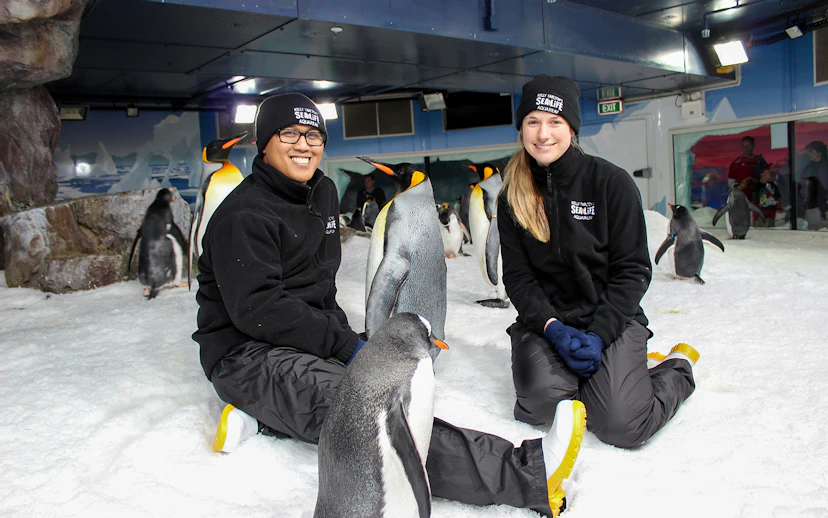
- Antarctic Ice Adventure → king and gentoo penguins in a climate-controlled habitat → budget 20–30 minutes.
- Shark tunnel → sharks, rays, and large marine species overhead on the curved tunnel route → budget 15–20 minutes, longer if you wait for clearer photo moments.
- Stingray and reef displays → calmer viewing tanks with tropical and regional marine life → budget 15–20 minutes.
- Interactive touch pools → hands-on family learning with supervised marine encounters → budget 10–15 minutes, longer with younger children.
- Conservation displays → rescue, rehabilitation, and marine education storytelling → budget 10 minutes if you want the visit to feel more than just visual.
Suggested route: Move steadily to the penguin zone first if you’re arriving early, then slow down through the tunnel and finish at the touch pools and conservation exhibits, which many visitors skim once the main-photo excitement is over.
Maps and navigation tools
- Map: On-site wayfinding and route signage cover the main visitor path → ask at entry if you want the clearest overview before starting.
- Signage: The route is straightforward for a standard visit, but busy family traffic makes a quick orientation stop worthwhile at the entrance.
- Audio guide / app: Information unavailable.
- Large outdoor POIs only: Not applicable.
💡 Pro tip: Don’t stop for your longest tunnel photos at the first clear panel — keep moving and you’ll usually get a calmer second chance once the first crowd bunches up ahead.
Get the SEA LIFE Kelly Tarlton’s Aquarium map / audio guide
Which animals and habitats should you prioritize?

Shark tunnel
Species / Habitat: Sharks and large marine predators in the curved underwater tunnel
This is the aquarium’s signature experience, and it still has the biggest wow factor because you’re looking up at sharks and rays from inside the water environment rather than across a flat tank. Most visitors stop at the first open window, but the better viewing often comes a little farther along once the crowd thins. It’s the section that feels most immersive, not just the most famous.
Where to find it: Along the main tunnel route in the central part of the visitor flow.
Antarctic penguin colony
Species / Habitat: King and gentoo penguins in the Antarctic Ice Adventure
This is one of the strongest reasons to visit because it gives you a very different mood from the tunnel — colder, quieter, and more observational. Slow down here long enough to watch how the colony moves and interacts rather than just snapping a photo and leaving. Many visitors don’t realize the gentoo penguins are usually the more active ones to watch.
Where to find it: Inside the Antarctic Ice Adventure zone.
Stingray displays
Species / Habitat: Large stingrays and open-water marine life
The stingray exhibits are easy to underrate after the shark tunnel, but they’re one of the most visually striking parts of the route because of the animals’ slow, gliding movement. This is one of the best places to pause if you want a calmer moment in the visit. People often hurry through it even though it’s one of the easiest zones for children to take in.
Where to find it: After the main high-traffic tunnel sequence in the marine display area.
Interactive touch pools
Species / Habitat: Small marine creatures in supervised hands-on learning spaces
These pools matter most if you’re visiting with children, but they’re also one of the few places where the experience becomes tactile rather than just visual. They add variety to the visit and make the aquarium feel more educational. Adults often breeze past them, even though staff interactions here can be more memorable than another quick tank photo.
Where to find it: Near the family learning and interactive exhibit zone toward the later part of the route.
New Zealand marine life displays
Species / Habitat: Native marine species from New Zealand waters
These displays give the aquarium more local identity and stop it from feeling like a generic tunnel-and-penguin attraction. Look for the contrast between native species and the more theatrical tropical displays elsewhere in the route. Many visitors remember the headline animals but miss that this is where the New Zealand context really comes through.
Where to find it: In the regional marine exhibits woven through the standard visitor path.
Conservation and rescue storytelling
Species / Habitat: Marine rescue, rehabilitation, and ocean conservation interpretation
This isn’t a live-animal highlight in the usual sense, but it’s part of what makes the visit feel more grounded and worthwhile. If you skip it, the aquarium can feel shorter and more surface-level than it really is. Many visitors move past these panels quickly, even though they explain why the penguin and turtle work matters.
Where to find it: Integrated through the later exhibit areas and interpretation panels near the end of the route.
Facilities and accessibility
- 🅿️ Parking: On-site parking is available, but spaces are under the most pressure in summer, on school-holiday mornings, and during wet-weather peaks.
- 🪑 Seating / rest areas: The visit is short enough for most people to do without long breaks, but exact seating locations are not confirmed here.
- ♿ Mobility: The aquarium is an indoor, fixed-route attraction, but confirmed details on full step-free coverage, lift access, wheelchair loan, and accessible restrooms should be checked before arrival.
- 🧠 Cognitive and sensory needs: Rainy afternoons, school holidays, and the shark tunnel area are the most stimulating parts of the visit, so quieter weekday mornings are the safest low-crowd window.
- 👨👩👧 Families and strollers: The attraction is strongly family-focused, but confirmed details on stroller access through every section and baby-changing locations should be checked before the day of your visit.
SEA LIFE Kelly Tarlton’s Aquarium is well suited to children because the visit is visual, interactive, indoors, and short enough that younger kids can stay engaged without needing a full-day energy reserve.
- 🕐 Time: 1.5–2.5 hours is realistic with young children, and the shark tunnel, penguins, and touch pools are the sections worth prioritizing first.
- 🏠 Facilities: The attraction is built for families, but specific details on feeding rooms, play areas, and stroller parking should be checked before arrival.
- 💡 Engagement: Don’t spend all your time waiting for the perfect tunnel photo — younger kids usually get more out of the penguins and touch pools where there’s more movement and interaction.
- 🎒 Logistics: Aim for an earlier slot, keep bags light, and bring a layer if you know your child is sensitive to cooler exhibit environments.
- 📍 After your visit: Mission Bay is the easiest family-friendly add-on nearby if you want food, space to reset, or a waterfront walk after the aquarium.
Rules and restrictions
What you need to know before you go
- Entry requirement: Pre-booking is smartest during school holidays, winter weekends, and rainy days, even though many visitors still book last-minute.
- Bag policy: Information unavailable.
- Re-entry policy: Information unavailable, so treat this as a one-flow indoor visit and plan snacks, rest stops, and your next stop afterward.
Not allowed
- 🚫 Food and drink: Information unavailable.
- 🚬 Smoking / vaping: Information unavailable.
- 🐾 Pets: Information unavailable.
- 🖐️ Touching exhibits: Touch is limited to supervised interactive areas, and standard tanks and habitats should be treated as look-only zones.
Photography
Photography is one of the main reasons people stop in the shark tunnel and penguin zone, and personal photos are generally part of the visit experience. Specific restrictions for flash, tripods, selfie sticks, and premium encounters are best checked on the day, especially if you’re planning more than casual phone photography.
Good to know
- Rainy-day crowds: Wet weather pushes local family demand up fast, so the aquarium can feel busier on a gloomy weekday than first-time visitors expect.
- Visit flow: The route is compact, but the main-photo zones create bottlenecks that make the second half of the aquarium easier to rush than you mean to.
Practical tips
- Booking and arrival: Book a few days ahead if you’re visiting in January, July, December, or during school breaks, because this is a classic Auckland rainy-day backup and popular slots can tighten faster than the annual booking window suggests.
- Pacing: Don’t treat the shark tunnel as the whole visit — save time and attention for the penguin habitat and touch pools, or the aquarium will feel shorter than the ticket price suggests.
- Crowd management: Weekday mornings work best here because the route is compact, and once families start bunching up in the tunnel and penguin zone, the whole visit feels busier than the actual visitor count.
- What to bring or leave behind: Pack light if you can, because this is a short indoor attraction and hauling extra gear through a stop-and-start tunnel route gets annoying fast.
- Food and drink: Eat before you go or plan a proper meal after, because the aquarium works best as a clean 2-hour visit paired with Mission Bay rather than a stop broken up around lunch.
- Trip planning: If Auckland weather turns bad, move this higher in your itinerary rather than assuming crowds will drop — the opposite usually happens.
- Families: Let children do the touch pools while they still have energy, not at the very end when the tunnel excitement has already peaked and patience is lower.
What else is worth visiting nearby?
Commonly paired: Mission Bay
Distance: Information unavailable — about 5 minutes by car from the aquarium
Why people combine them: It’s the easiest same-area pairing because you can follow a short indoor wildlife visit with waterfront dining, beach time, or a longer Tamaki Drive walk.
Book / Learn more
Commonly paired: Sky Tower Auckland
Distance: Information unavailable — about 15 minutes by taxi or bus from the aquarium
Why people combine them: This pairing works well on changeable-weather days because you get one indoor marine attraction and one iconic skyline stop without overloading the day.
Book / Learn more
Also nearby
Auckland War Memorial Museum
Distance: Information unavailable
Worth knowing: It’s a strong add-on if you want to balance a family attraction with New Zealand history, Māori culture, and a more museum-style afternoon.
Waiheke Island ferries
Distance: Information unavailable — accessed from central Auckland after returning from the aquarium
Worth knowing: This is less of a same-neighborhood pairing and more of a bigger Auckland plan, but it works if the aquarium is your lighter morning stop before an afternoon ferry departure.
Eat, shop and stay near SEA LIFE Kelly Tarlton’s Aquarium
- On-site: Information unavailable.
- Mission Bay waterfront dining (about 5 minutes by car, Tamaki Drive): Best post-visit option if you want an easy meal with sea views and enough choice for families.
- Tamaki Drive cafés (between the aquarium and central Auckland, Tamaki Drive): Useful for a quick coffee or light stop if you’re not ready for a full sit-down meal.
- Auckland CBD dining (about 10–15 minutes away, central city): Better choice if you’re continuing sightseeing and want more variety than the waterfront strip offers.
- 💡 Pro tip: Eat after the aquarium rather than before unless you’re arriving right at opening — the visit is short, and Mission Bay makes much more sense as the natural meal stop.
- Aquarium retail options: Information unavailable.
- Mission Bay local shops: Best for a casual browse after your visit rather than destination shopping.
- Auckland CBD shopping: A stronger option if shopping is part of your day, since the aquarium area itself is better for views and dining than retail.
Staying right by the aquarium only makes sense if you specifically want a quieter waterfront base and don’t mind relying on short taxi or bus rides for the rest of Auckland. For most visitors, it works better as a half-day stop than as the best hotel district. If you’re on a short trip, the CBD is still the easier base.
- Price point: The waterfront skews mid-range to upper mid-range compared with broader Auckland options.
- Best for: Visitors who want a calmer harbor-side stay and plan to combine the aquarium with Mission Bay or Tamaki Drive time.
- Consider instead: Auckland CBD or the Viaduct if you want easier access to ferries, city sights, tours, and more dining within walking distance.
Frequently asked questions about visiting SEA LIFE Kelly Tarlton’s Aquarium
Most visits take 1.5–3 hours. If you move quickly and focus on the shark tunnel and penguins, you can finish sooner, but families, photographers, and anyone adding a premium animal encounter should expect to be there closer to the upper end.
You don’t always need to book far ahead, but it’s smart to do so during school holidays, rainy weekends, and the busiest months like January, July, and December. More than half of bookings are still made in the last 48 hours, so popular time slots can tighten quickly when weather changes.
It can be worth it on wet-weather weekends and school-holiday mornings, but it isn’t essential year-round. This is a shorter attraction than a major theme park, so the value depends on whether you’re visiting at a peak family time or just want a smoother start.
Arrive about 10–15 minutes early. That gives you enough buffer for check-in, parking, or a short queue without eating into the first part of your visit, which is usually the calmest time inside.
Small personal bags are usually the easiest choice for this visit. Exact locker and large-bag policies should be checked before arrival, but the route is compact enough that traveling light makes the whole visit more comfortable.
Yes, casual personal photography is a normal part of the visit. The shark tunnel and penguin habitat are the biggest photo stops, but if you’re planning to use special equipment or photograph during a premium encounter, check the attraction’s current rules before you go.
Yes, and the aquarium is a common choice for families, school groups, and small tour groups. The route is easy to follow, but groups work best if you don’t all stop at the same tunnel window and block the flow.
Yes, it’s one of Auckland’s better family-friendly indoor attractions. The visit is short enough for younger children, the touch pools add hands-on variety, and the penguins and tunnel give you big visual moments without the commitment of a full-day attraction.
Accessibility details should be checked directly before you visit. It’s an indoor attraction with a fixed visitor route, but confirmed information on full step-free access, accessible restrooms, and wheelchair support is important if accessibility is central to your planning.
Food options are easy to find nearby, even if you don’t rely on the attraction itself. Mission Bay is the most natural post-visit food stop, and central Auckland is only about 10–15 minutes away if you’re continuing your sightseeing afterward.
Weekday mornings outside school holidays are usually the easiest time to go. Rainy afternoons can actually be busier than expected because local families pivot to indoor plans, and the tunnel-and-penguin route feels crowded quickly once people start bunching up.
Yes, and that’s exactly why it gets busier when the weather turns. It’s one of the city’s most reliable indoor family attractions, so bad weather is a reason to book earlier, not a reason to assume the crowds will disappear.